Development and Performance
Welsh Athletics Sports Injury Clinic
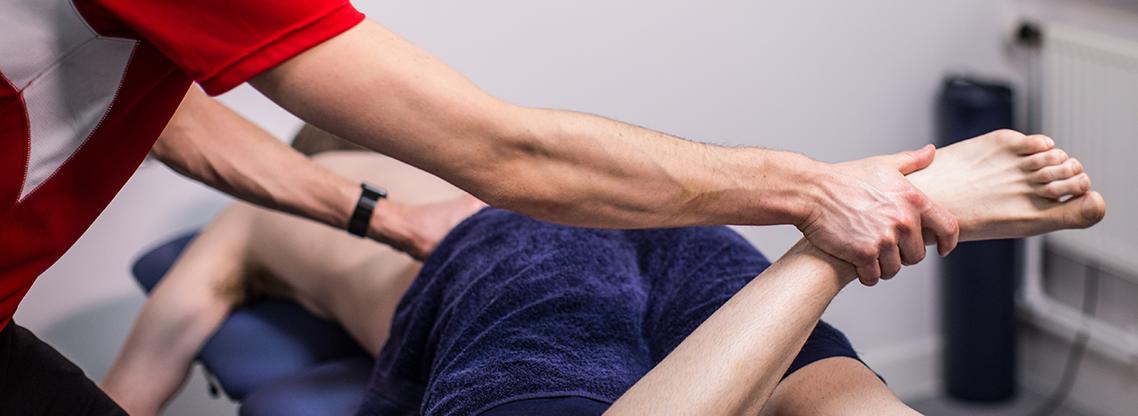
Sports Physiotherapy & Sports Massage Specialists in Cardiff
Based in the National Indoor Athletics Centre, Welsh Athletics in partnership with Cardiff Met University, offers a range of physiotherapy, sports massage and injury rehabilitation clinics.
Our goal is to provide the same high-level physiotherapy and soft tissue therapy services our athletes receive to the wider running and athletics community.
With an extensive background in sports injury management and rehabilitation, our highly experienced practitioners work with each individual to undertake a comprehensive assessment and build treatment plans which work towards your goals with the aim of getting you back to full function and performance.
Common Sports and Musculoskeletal Conditions:
- Achilles pain/tendinopathy
- Hamstring/calf strains
- Ankle/knee ligament injury
- Lower back pain
- Plantar fasciitis
- Shin splints
- & many more
Treatments Offered:
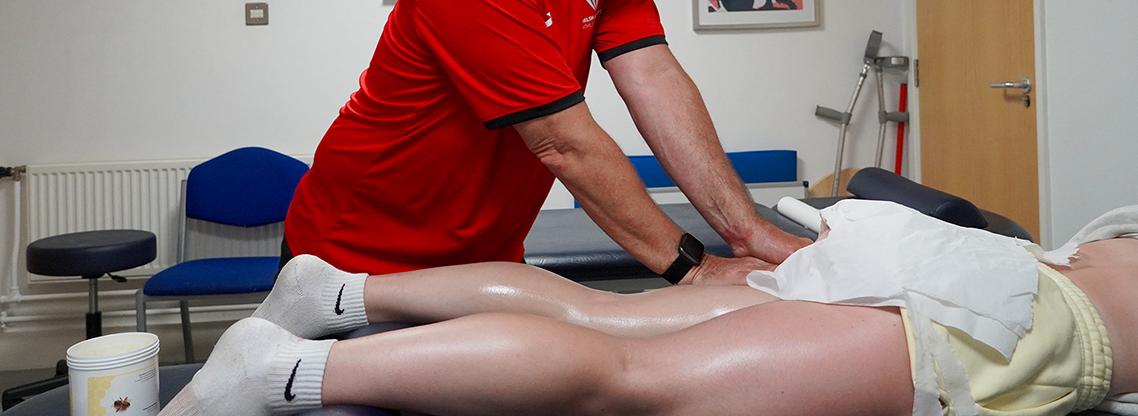
- Soft tissue therapy (sports massage)
- Acupuncture
- Manual therapy (including mobilisations and manipulations)
- Rehabilitation/exercise programmes
- Graduated return to sports programmes
- Student led rehabilitation
Should I book a physiotherapy or sports massage session?
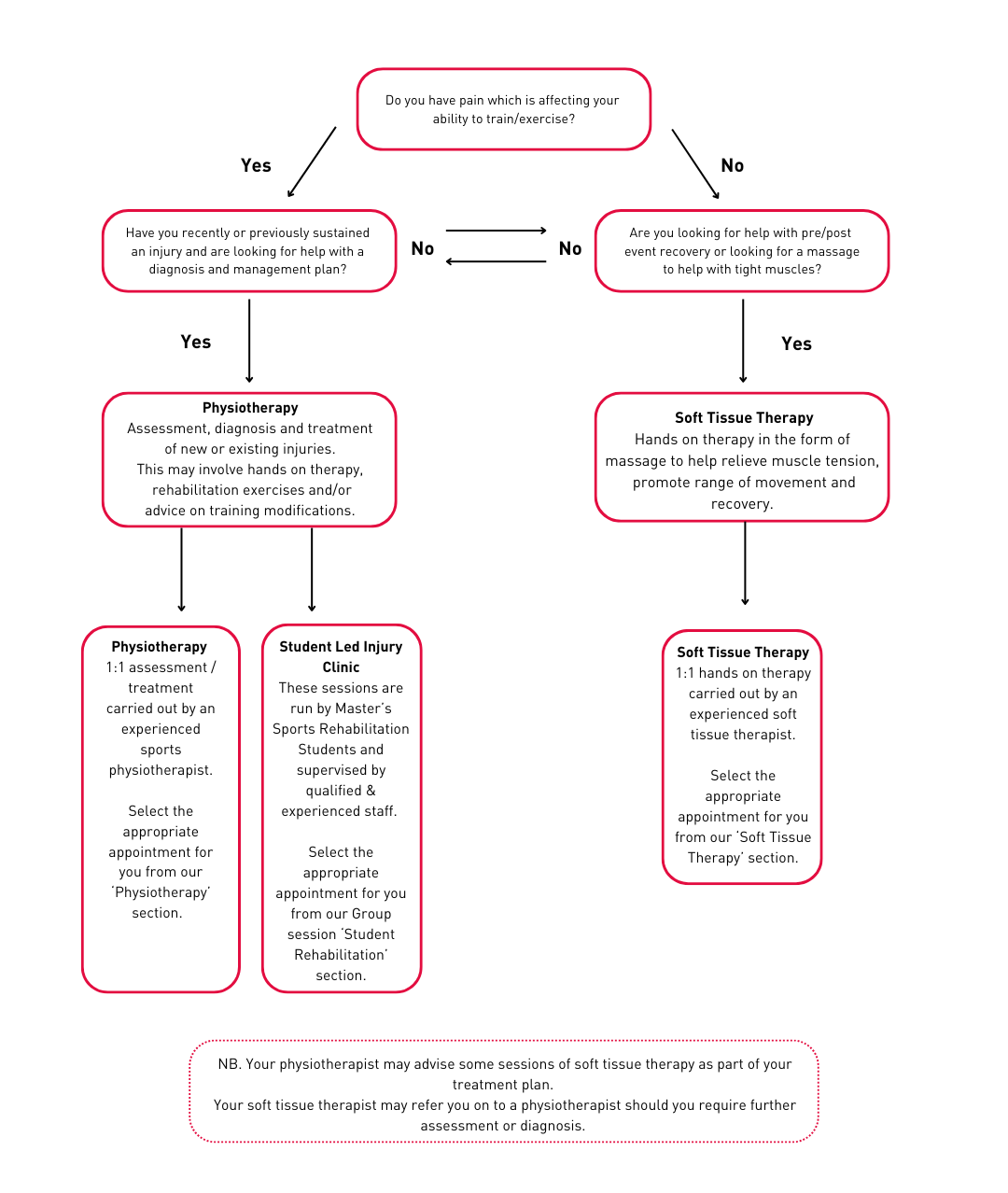
BOOK YOUR APPOINTMENT TODAY!
Further student led clinics are available through the Cardiff Met Uni Injury Clinic – please use the link below.
CARDIFF MET UNI INJURY CLINIC
Strength Diagnostics:
We offer a range of strength diagnostic tests to help you identify a specific weakness you may have or to help facilitate your return to training/sport from injury.
We offer a range of strength diagnostic tests including:
Handheld dynamometry (HHD) is an objective method for assessing muscle strength using a portable, force-measuring device. The device is placed against the limb to be tested and you are then asked to produce a maximal force against the instrument while the physio stabilises it.
This test is commonly used for assessing hip and ankle strength.
A muscle capacity test evaluates the functional performance and endurance (fatigue resistance) of a muscle or muscle group.
This test is commonly used for assessing calf, glute/hamstring and trunk capacity.
An isometric push test evaluates strength by having you push with maximum force against an immovable object (usually a fixed bar). This can be in a variety of functional positions, on either one or two legs.
This test is commonly used to measure peak force.
The Countermovement Jump (CMJ) test is used to evaluate lower-body explosive power, neuromuscular efficiency, and fatigue levels. The test requires you to perform a rapid downward dipping motion immediately followed by a maximal vertical jump.
This test is commonly used to measure peak lower limb power.
The Drop Jump (DJ) Test is a plyometric assessment used to evaluate reactive strength, lower limb stiffness/reactivity and biomechanics. It measures how quickly and powerfully you can absorb a downward force and immediately rebound into a maximal vertical jump.
This test is commonly used to measure lower limb reactivity/plyometric ability.
The Athletic Shoulder (ASH) test is an objective, long-lever isometric test used to evaluate shoulder strength in overhead and contact athletes. It requires you to lie face down on the floor with your hand on the force plate. Your physio will ask you to push as hard as you can into the plate at various shoulder angles.
This test is commonly used to measure shoulder strength.
The NordBord is a portable testing system used to measure hamstring strength through either isometric and/or eccentric tests.
This test is commonly used to measure peak force of the hamstring muscles.
Featured links
Useful pages within this section you may like to consider visiting.